Annabel Crabb: ‘I worried that people might think I’m an idiot’ | Podcasts
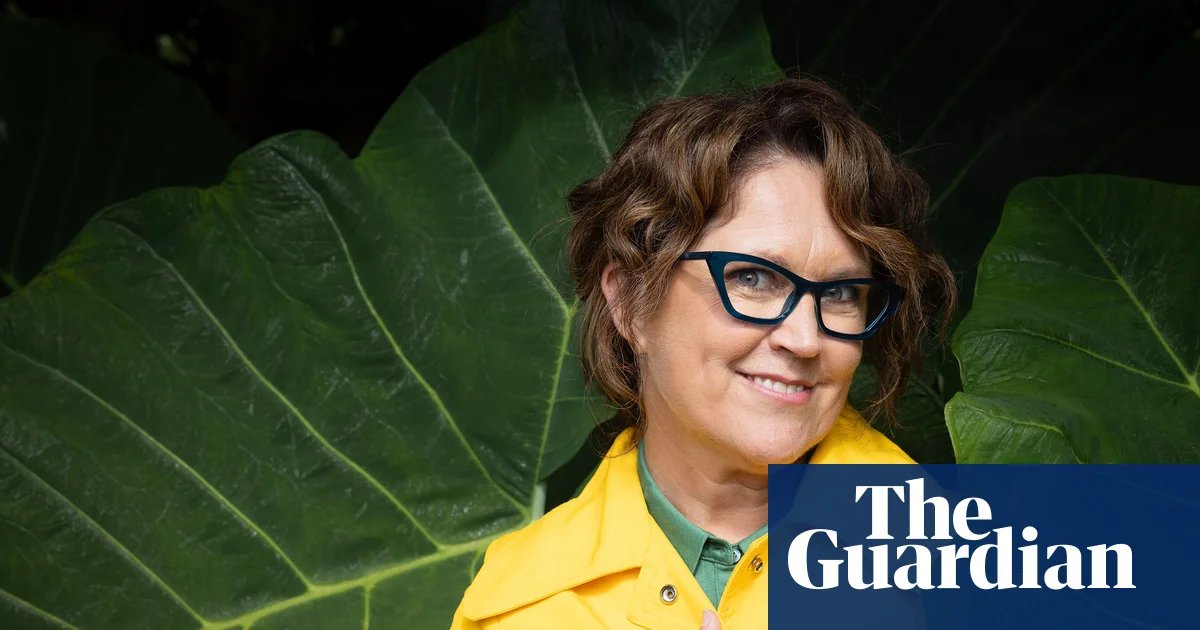
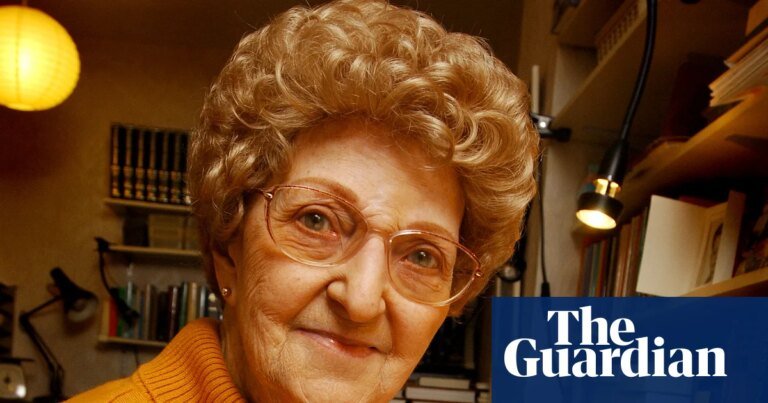
There’s a locket of hair in Annabel Crabb’s handbag. It belongs to her paternal grandmother. “Our family doesn’t really throw things out,” she says enthusiastically. “We’ve also got two thick plaits of my late maternal grandma’s hair from when she was a girl.”
The ABC writer, presenter, podcast host, political commentator and all-round inquisitive polymath is talking about family treasures and what makes an object worth keeping as we sit on high stools at a cafe inside the Calyx at Sydney’s Royal Botanic Gardens.
Crabb chose to walk around the country’s oldest public gardens because “it’s the oldest collecting institution in Australia”. It’s also close to the State Library of New South Wales, where she has been interviewing staff for her latest ABC podcast, History or Hoarding?, a historical deep dive into curious objects in the library’s collection.
It’s an overcast autumnal day with bright patches of blue sky. Crabb has packed a characteristically colourful yellow raincoat – in case we’re caught in a shower – but before we start walking we talk about her holiday in Vietnam, where she bought the tank top she’s wearing – emblazoned with a picture of a bucket of popcorn. “There’s a matching skirt with popcorn on the back,” she says, delighted, but she says her children find that part a bit embarrassing.
In person, the Kitchen Cabinet host is as affable and animated as she appears on screen. She is often approached by Chatters, fans of her blockbuster Chat 10 Looks 3 podcast with the political journalist Leigh Sales, where no topic is too pop culture or domestic, from Mean Girls quotes to what to wear when meeting Michelle Obama.
Though she loves meeting fans, Crabb feels anxious when she attends events in case she doesn’t recognise people she’s met before.
“My worst thing, and this actually causes me genuine distress, is that I’m kind of bad with faces,” Crabb says. “Last time I went to the Logies I cried in the makeup room because I misrecognised about three people in a row, including somebody who played me – the lovely Emily Taheny from [Shaun] Micallef’s program [Mad as Hell].”
Crabb lives in Sydney’s inner west with her partner, Jeremy Storer, a senior lawyer at the ABC, and their three teenage children. Witnessing her eldest daughter vote for the first time in 2025 was “lovely to watch”, she says.
It happened while she was filming Civic Duty, an ABC docuseries about Australia’s democratic system. The three-part show treats dry subjects, like the preferential voting system, with Crabb’s usual wit and approachability. It’s a skill she’s applied in her latest book, too, a guide to Australia’s democracy for kids, called There’s a Prawn in Parliament House.
Growing up, politics wasn’t a big topic for her family. “My parents weren’t particularly involved in politics but they were farmers so, you know, there are particular policy issues that would appeal to them, and we were aware of all that, but I mean I wouldn’t say that it was a very political household.”
After studying arts and law at Adelaide University, where she met Storer, Crabb became a journalist at the Advertiser covering state then federal politics. She moved to the Age in Melbourne, then to London where she was a correspondent for the Sunday Age and the Sun-Herald.
Audrey, their first child, was born while they lived in London. “It was quite magical, actually,” Crabb says of early motherhood. “My oldest friend from childhood, Wendy Sharpe, who I’ve written a couple of cookbooks with, lived around the corner and she dropped food at our door every morning for a week. It was just like this little cocoon of the three of us. That was kind of incredible.”
They moved back to Australia in 2007, before Audrey was one. Crabb later joined the ABC in 2009 as chief online political writer and a presenter of The Drum. Her first major hosting role was in 2012 for ABC’s Kitchen Cabinet. “I worried that people might think I’m an idiot but we’re about to make the ninth series of that show. It’s been great fun.”
The format, in which politicians cook for Crabb and she brings dessert, was criticised for being too soft with important political figures. In 2023, Crabb issued a withering defence of her approach, writing: “I use every ounce of my skill to draw them in and make them feel like this is a real conversation, not an interview. That’s why people tell me things.”
Crabb has not been shy in treating issues of the home with the same rigour as she applies to political analysis. More than a decade ago she published her pivotal book The Wife Drought, addressing the impossible work-life balance for women. She is encouraged by trends such as it is becoming more acceptable for fathers to take parental leave but says structural change is “not fast enough”.
“I don’t make judgments about the choices that people make in terms of how to organise their lives,” she adds, making eye contact through her blue cat-eye frames. “My concern is always that where there are assumptions, as there still deeply are in Australian society, about whose proper job it is to look after the children and whose proper job it is to earn income.”
When Crabb finishes her green juice, we step outside to walk towards Sydney Opera House. Tourists in T-shirts are ambling on the winding paths, young children race along the grass on a school trip, and silver-haired women in puffer jackets admire the flowers. Crabb, 53, glides through the gardens, speeding up as she talks about the people she’s been interviewing.
“One of the great joys of making this series was actually meeting the library’s first two Indigenous librarians, Ronald [Briggs] and Melissa [Jackson], who started as trainees on the same day 34 years ago,” she says. “They came onboard at the library at a time when it was white dudes making decisions about what was worth keeping.”
When the library was founded in 1826, “by a bunch of rich guys in a pub”, she says, there was a membership fee and women weren’t permitted. “Their business model was ridiculous,” she quips.
Crabb’s own family were keepers. Her parents ran a sheep and grain farm in Two Wells, South Australia. “You never really throw anything out on a farm,” she says. “Let me tell you, I do not throw things out. If I break a plate I’ll be like, ‘I’m going to put those pieces in the cupboard for when I learn kintsugi.’”
On our walk around the gardens, Crabb points out a beautiful patch of yellow daisies, and we start talking about her mother and grandmother, who were “very gifted and devoted gardeners”.
“Both of them are the sort of people who would love to be given a tonne of manure for their birthday – which did happen a couple of times during my childhood,” she says.
By her own standards, Crabb says she doesn’t have a green thumb. Instead, she connected with her mother through cooking. “Mum, like me, is somebody who loves to cook new things, experiment, keep clippings of recipes,” she says.
If Crabb’s house was on fire, she’d rescue a sketchbook that she started 18 years ago, filled with recipes and memories of her children (“after my children and the dog”, of course).
“As the kids started to talk, I started using that book to write down the funny shit they said. It’s an interesting family document now. They love it. When my daughter turned 18, I had a ready-made speech.
“In fact, when my daughter moved away to university, she demanded that I start her scrapbook. I wrote out all the recipes for things I cook that she likes and away she goes.”
Perhaps it will be one more keepsake for the next generation.