
‘We know fans bleed for the jersey’: how Norway used fierce football rivalries to get more blood donors | Norway

In 2023, the Norwegian Red Cross had a problem. Data estimated that while 50% of Norwegians would be in need of blood during their lifetime, fewer than 2% of the eligible population were donating. To compound the situation, many registered donors were leaving the system due to age and health conditions. This meant that the Red Cross desperately needed to find a new demographic of donors to meet the ever-growing demand for blood. Enter the Blood League.
Launched in autumn 2023 with the slogan, Blø for drakta (bleed for the jersey), the Blood League campaign aimed to harness the power of footballing rivalries to increase blood donations by establishing a friendly competition between the top-flight men’s and women’s football teams. Every time someone went to register as a blood donor, they could declare their footballing allegiance and score a point for their team, with the club that produced the most sign-ups winning the league for that year. “We know that football supporters bleed for the jersey and we wanted to transfer that to being a life-saving action,” says the blood programme’s senior adviser, Camilla Rodø.
The campaign’s target was to recruit 5,000 new donors, but almost 10,000 sign-ups were recorded across the two years it ran. That equates to a potential 29,000 lives being saved.
Football was identified by the Norwegian Red Cross as a viable theme for a campaign because of how central the sport is to Norwegian culture. “It’s a big part of the Norwegian identity. When I was a kid, there were only three things you could do: play football, cross-country ski or be in the school band … that’s all we did. And who would have guessed that this small country in the northern part of Europe has so many different football clubs? It’s a passion for so many,” Rodø proudly explains.
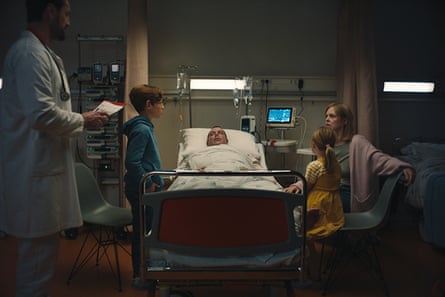
One of the most creative aspects of the campaign lay in its utilisation of Norway’s distinctly regional football culture via a series of TV advertisements. The adverts featured a critically ill man in a hospital bed, surrounded by his family. A doctor tells them that he needs a blood transfusion to survive but that the only blood available is from a supporter of a rival football team. Eventually the family agrees, but not before making it clear that this was “perhaps the worst thing that could have happened to him”. It was important that the project had a sense of humour, Rodø explains. “A lot of Norwegians are very grounded and down to earth. We don’t take things so seriously.”
For maximum impact, 21 versions of the ad were made to target regional rivalries across the country. The Red Cross credits this as being a key factor in why the campaign was so successful, as it established that by registering as a donor you were demonstrating your regional identity and pride. An online leaderboard, which was updated live with every new registration, created a real competitive edge.
“Becoming a blood donor was something I had considered for a long time, but I never actually took the step,” says new donor and Rosenborg BK supporter, Signe Opsal. “This campaign was the final push I needed. Football, and especially Rosenborg, are a big part of my identity. Knowing that I could give something back, help save lives, and at the same time contribute to my club’s success in the Blood League made the decision easy.”
Opsal was clearly not the only Rosenborg fan inspired by the campaign: the second and final year of the Blood League was won by the Trondheim-based team. The first year it was won by Tromsø IL, a club from Norway’s far north, known for having a very tightknit community. “It was a huge movement within the city; everyone was supporting the campaign,” says Rodø, remembering when she visited the town during the project.
Despite only officially running in 2023 and 2024, the impact of the Blood League campaign is still informing the Red Cross’s advocacy today, and the team hopes to use Norway’s momentum in the 2026 World Cup to help spread further awareness about the importance of donating blood. “After the match between Norway and Brazil there were 100,000 people gathered on the streets of Oslo to do the rowing celebration! It demonstrates how football can unite and inspire people to do extraordinary things for society,” Rodø says.
While we’re unlikely to see Erling Haaland down at the blood bank before his team’s big match against England, this mindset suggests how a project like the Blood League was able to gain such traction in Norway. Its creators hope that the concept could be adopted in other football-crazy nations. Blood supply shortages are a global issue: last year in the UK, the NHS issued an amber alert, saying it was seeking 200,000 more blood donors to avoid a threat to safety. The Norwegian Red Cross has already been contacted by Portuguese and Chilean authorities for advice, they say. Perhaps one day we’ll have an international blood league, alongside the World Cup?