A cathartic play unpacks the pain of heartbreak with classic breakup songs: ‘As close to a universal experience as one gets’ | Theatre

In 1983, the Japanese doctor Hikaru Sato diagnosed the first medical case of “broken heart syndrome”. Seen in patients after a significant physical or emotional stressor, such as grief, the condition results in a sudden, temporary weakening of the muscular wall of the heart.
Sato named it takotsubo cardiomyopathy, because in those with the syndrome the left ventricle of the heart changes to resemble a takotsubo – a Japanese pot traditionally used to catch octopus, with a narrow neck and wide base.
“Takotsubo syndrome is like poetry made manifest,” says writer and actor Karin McCracken. “It’s unbelievable to me that it’s a real thing.”
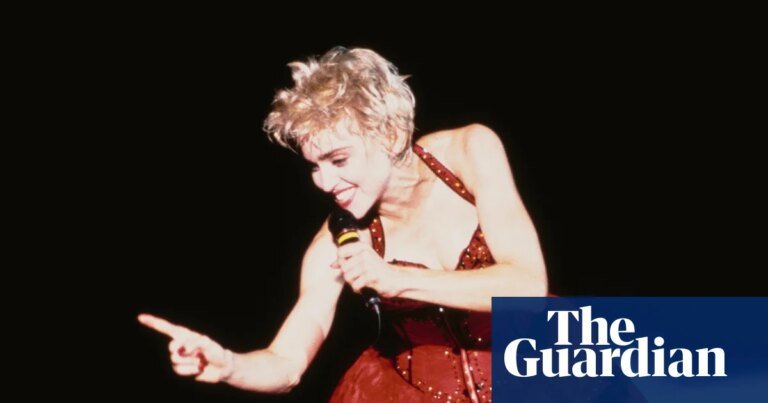
McCracken came across the condition during her research for Heartbreak Hotel, a show that is part play, part monologue with no fourth wall, and packed with synth-heavy covers of classic breakup songs. It details the experience of heartbreak – both the psychological and physical impact it can have on the body, of which takotsubo syndrome is an extreme example. After a selling out at last year’s Rising festival in Melbourne and touring internationally, Heartbreak Hotel begins a new Australian tour this week at Arts Centre Melbourne.
McCracken, who co-directs the New Zealand contemporary theatre company EBKM with Eleanor Bishop, had wanted to explore the issue of heartbreak, which to her seems “as close to a universal experience as one gets”.
“I had been heartbroken for quite a long time and I had found it very difficult to find in culture media that felt both authentic and truthful, and also reassuring,” McCracken says. Much of what she had come across was either “too grim”, without a sense that life would improve after a breakup, or too “happy-clappy-you’ll-meet-someone-else, but it didn’t necessarily feel real”.
“So the mandate for me, writing, was: is there a way to strike a chord right down the middle of those two things?”
There are scientifically documented benefits to getting through a breakup. A 2022 German study found that people felt less in control of their lives within the first year after separating from a partner, but regained a sense of control thereafter – a phenomenon the researchers described as allowing people to grow, “deal with adversity and manage their life independently”.
In research for her show, McCracken turned to the rich repository of literature and music about grief and romantic heartbreak. She drew from the poetry of Sylvia Plath and Pablo Neruda, as well as from Charles Dickens (the wealthy Miss Havisham, who was jilted at the altar in Great Expectations, is for McCracken the “canonical broken-hearted woman with an unhappy ending”).
From nonfiction, she took inspiration from Joan Didion’s memoir of losing her husband, The Year of Magical Thinking, as well as Rachel Cusk’s Aftermath: On Marriage and Separation, in which the author describes grief as “romance’s estranged cousin, a cruel character, all sleeplessness and adrenaline unsweetened by hope”.
McCracken’s performance is formally inventive, with nonlinear scenes detailing the aftermath of a breakup. “I really wanted it to be funny – my god, I wouldn’t go to a show about breakup without laughs,” she says.
There is, of course, a rendition of Elvis’s Heartbreak Hotel, from which the show takes its title, but also covers of the Bonnie Raitt ballad I Can’t Make You Love Me and – depending on the night – either the Prince-penned, Sinéad O’Connor-popularised Nothing Compares 2 U, or Céline Dion’s It’s All Coming Back to Me Now.
The physical impacts of heartache are well established. There are changes in the levels of stress hormones such as cortisol, and the pain that people experience after a breakup or bereavement is thought to relate to the activation of a brain area known as the anterior cingulate cortex, which is also activated by rejection.
The same brain area, however, is also linked to the emotional experience of awe – which McCracken sees as an antidote of sorts to heartbreak.
“[When I was heartbroken] I was thinking about myself constantly – I was thinking about my own pain and my woe,” she says. “When you experience awe, that all minimises and you see yourself as part of this much larger thing, surrounded by incredible beauty – if you can find it.”