Anthony Burke: ‘It won’t be uncommon in 20 years to have four houses sharing one back yard’ | Art and design
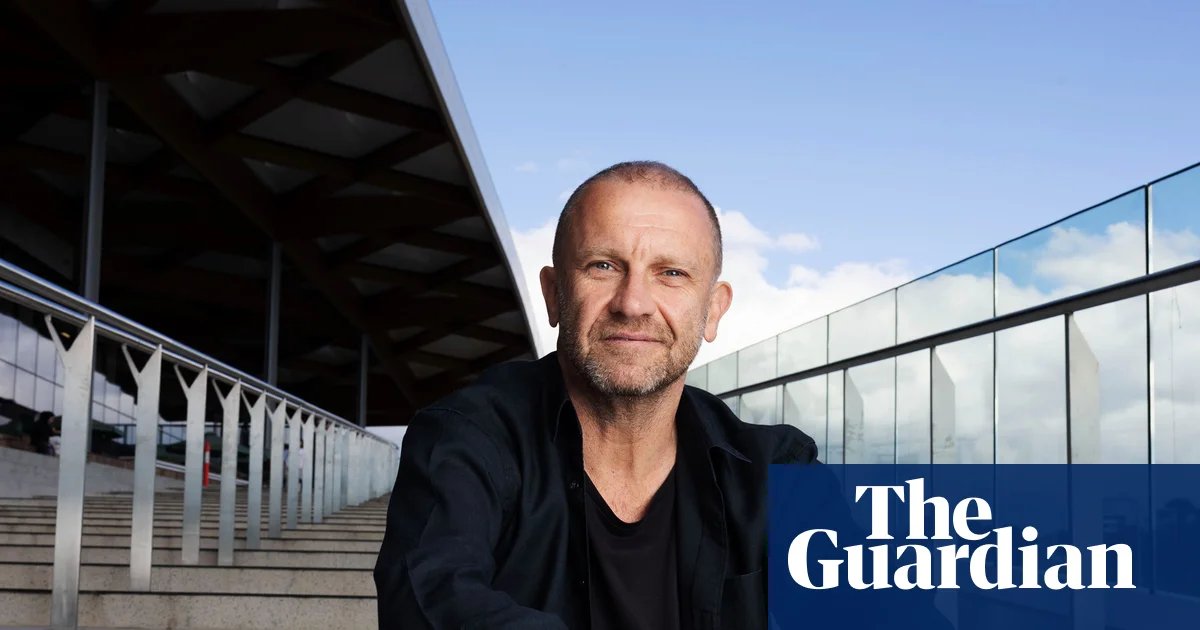
Jelly-like eyeballs are staring back at architect Anthony Burke as he approaches the ice-packed, fish displays in front of Claudio’s Seafoods in Sydney’s new fish market. Sand whiting, blue mackerel and coral trout are packed into glossy rows, their eyes dull or slightly surprised. The ruby snapper, in contrast, looks more like a movie star, with its orange-rimmed eyes that seem to entice us.
Burke is moving through each display energetically, pointing out the bar cod cutlets – his favourite. Before the renovation, this place used to be in the old car park and the purchase process was deeply convoluted.
He grins. “This is better.”
“Better” is the $800m new fish market in Pyrmont, which sits beside the old site in an enormous sweep of timber, glass and steel. It’s mid-morning on a drizzly Thursday and already packed.
Design magazines have been fawning over the Sydney Fish Market, Burke says. It was a 10-year project with a complicated brief, from needing to attract tourists to housing auction rooms and cold storage. It wasn’t easy but it worked, and has just been listed by Time magazine as one of the world’s greatest places of 2026.
“It’s brave,” he says, looking up into the sweeping underside of the roof, which is encrusted with 400 solar panels. “We don’t have many brave buildings in Australia.”
We grab takeaway coffees and sit outside in the generous amphitheatre of steps leading down to the water. A persistent seagull bounces around a family eating hot chips below.
Burke is best known as the enthusiastic host of Grand Designs Australia and Restoration Australia, and for his ABC Radio National podcast By Design, where he talks about everything from Delta Goodrem’s Eurovision staging to everyday objects like Eskies and wristwatches.
His fascination with architecture runs deep. Growing up in a suburban cul-de-sac on Sydney’s northern beaches, he was the first in his family to go to university. Today he is professor of architecture at UTS, equally comfortable discussing the 19th-century French architect Eugène Viollet-le-Duc as he is bathroom tiles.
“I don’t see those things as two separate worlds,” he says, smiling. “They’re both architectural.”
Burke looks back out across the water. The old fish market site will soon be replaced by four tower blocks, rising into the city skyline we are now looking at.
He calls it an “obliteration” of the landscape.
“If this building is brave,” he says, nodding towards the new market behind us, “then the new development is a necessary evil. It’s a trade-off to pay for it all.”
Still watching the water and noticing an ibis standing on one leg in the drizzle, he returns to a bigger question, one that will carry the walk forward around the building.
For Burke, architecture is never just about aesthetics. It shapes how we live, how we gather, it even affects our physical health and emotional wellbeing.
“Our houses are killing us,” he says bluntly. He quickly offers bullet points: Australian houses are too big, with too many toilets and not enough trees – we lack insulation. “Just make houses warm and comfortable to be in, so you can feel well,” he says, exasperated.
“Don’t even get me started on the plastics and the off-gassing from the VOCs [volatile organic compounds, found in building materials and furniture that evaporate into the air] that we seem to be comfortable living with and breathing in all the time.”
We flip houses every 11 years on average – it used to be seven years. “Worse!” he says. “People don’t stay in a house long enough to get attached, they’re always thinking about the next house.” Bigger homes, renovations and resale value dominate the national conversation, often at the expense of wellbeing, community and design.
“When ROI is the only conversation, we miss out on actually living a life.”
The rain sets in, so we do another lap of the market. We walk past the florist with an abundance of carnations, dahlias, hydrangeas; the German bakery with cinnamon swirls, and Biscoff babka, past the fine wines and into the marketplace where a man is shucking oysters and a pair of tourists take selfies with an enormous whole bluefin tuna.
It’s midday now and extended family groups are opening up takeaway boxes of seafood at the outside tables, fortunately under cover.
This prompts Burke to think about loneliness. “One in three Australians, every year, has had some moment of loneliness,” he says with emotion in his voice; one in six report being often lonely.
“It’s because we feel like we can do everything inside our houses. We can’t, nor should we attempt to. We should be engaging with the community in our street, and the local shops and community centres, and investing in those things, because we want to spend time there. Not because it’s cheaper, but because it actually makes us feel better.”
So what can we do?
“Our houses need to be reimagined and become good for purpose again,” he says. “I genuinely think we are at the beginning of a radical change in what it means to live in a home in Australia.”
Burke says there is a new generation of young architects, many of whom may never own homes themselves, imagining radically different models of Australian living: “They’re thinking about different things, like how do I share with my friends, or how do I co-op, or how do we multigenerational live,” he says. “These aren’t radical ideas from the 70s, they’re real opportunities now.”
“Maybe it won’t be so uncommon in 20 years’ time to have four houses to care for one back yard and one parking spot, or we all have a common laundry. I’m speculating about the future but I think it won’t be unusual.”
We walk past a group of schoolgirls buying chocolate-coated strawberries, and head back outside where a man is walking his excited schnauzer. Burke smiles at him.
Wrapping up our walk, he says his mission is to invite people into the “beautiful big tent that is architecture” to have big conversations about ideas, about where we’re going and what we value.
On Grand Designs Australia, those conversations get real very quickly; arguments arise when couples don’t share the same values. “A good architect should challenge you on what kind of life you want for your family before they start drawing.”
That sounds confronting.
“Yes, it’s like a kind of architecture as therapy.”
He says the best thing people can do is look at the plans for their dream house and take 20% of that plan away. “Just get rid of it, and then redesign everything you’ve got with 20% less, that’ll focus you on what is important,” he says.
You don’t necessarily need a bigger house to live differently, Burke says. “Move your furniture around,” he says. “Sit in a different position. Change the fabrics and bring in more plants.” Small shifts, he believes, can change the emotional feel of a home.
Saying goodbye, he jokes that sometimes “everyone on the show needs therapy” after filming an episode of Grand Designs. He chuckles. “But these conversations, I hope, can inspire people to think a little bigger, a little braver, a little more ambitious for the world around them. That’s what I hope for.”