From Korean chicken to Egyptian street food: international recipes inspired by the World Cup | Food
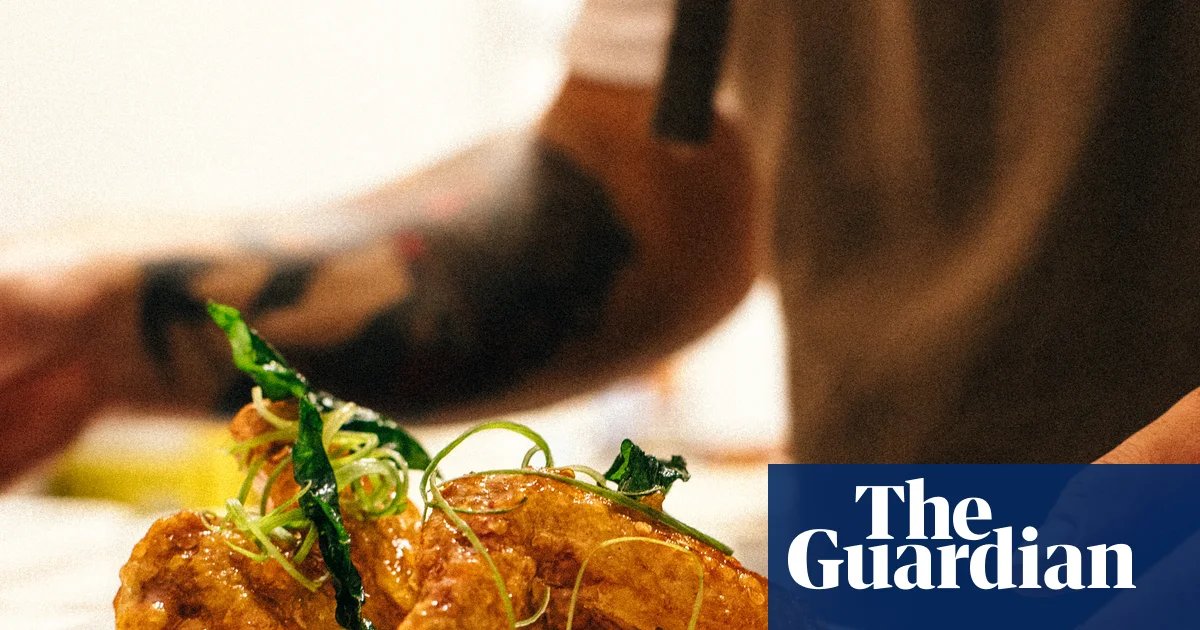
Korea: fried chicken (pictured top)
Double-frying gives this spicy chicken its famous crunch.
Serves 4
1 whole 1.5kg/medium-sized chicken, cut into 6cm chunks, on the bone
3 tsp fine salt
1 tsp ginger, grated
Flavourless cooking oil (vegetable or sunflower), for frying
Cornflour, for coating
For the glaze
50g garlic, peeled and crushed
465g corn syrup or rice syrup
110ml soy sauce
100g water
20g gochujang paste
13g gochugaru (Korean chilli powder)
For the batter
400g cornflour
175g plain flour
1 tsp baking powder
1 tsp fine salt
600ml sparkling water
Rub the chicken all over with the salt and ginger, and marinate, covered, for a few hours or overnight in the fridge.
To make the glaze, stir-fry the garlic briefly in a little vegetable oil without it colouring, then add the remaining glaze ingredients. Simmer gently for 25 minutes, until thickened slightly.
Immediately before frying the chicken, mix all the batter ingredients together. Consistency is key: too thin and it won’t coat the chicken properly, too thick and it will lose its delicate crunch. You may need to add a little water or flour to get this right.
Using a deep-fat fryer or a high-sided saucepan filled to about 10cm deep, heat the oil to 160C (325F). If you don’t have a thermometer for the oil, take a small cube of day-old bread and drop it into the oil. If the oil sizzles and the bread browns in 30 seconds, the oil is about the right temperature. Tip some cornflour into a bowl, coat the chicken pieces and wipe off any excess, then drop the chicken into the batter. Turn to coat, and let the excess drip off before placing in the fryer in batches. Fry for seven minutes, until the internal temperature is 75C (165F), then remove and place on a rack to drain. Set aside for 15-20 minutes.
Meanwhile, reheat the glaze, to a good, thick – but not jammy – consistency.
Heat the oil to 180C (350F), then place the chicken in the pan for three minutes more. Remove, drain and coat with the glaze (dipping or brushing). Leave for 30 seconds to a minute, then serve.
From Kyu Jeon and Duncan Robertson, chef-owners of award-winning Dongnae in Bristol.
Curaçao: pastechi di piska
Curaçao has a rich Sephardic heritage that dates back to the 17th century, when Jewish settlers from Portugal and Spain migrated to this Caribbean island. One of the dishes from this community is this crisp, golden pastry filled with seasoned fish.
Serves 6
For the dough
325g plain flour, plus extra for dusting
1 tsp baking powder
½ tsp salt
4 tbsp (60g) butter, at room temperature
1 egg, beaten, plus extra for glazing
For the filling
2 tbsp vegetable oil
1 small onion, peeled and minced
1 garlic clove, peeled and minced
½ green pepper, chopped
1 tsp tomato puree
225g cod, cooked and flaked
1 tbsp capers, chopped
1 tsp fresh thyme leaves, chopped (if using dried thyme, reduce to ½ tsp)
1 tbsp flat-leaf parsley, finely chopped
Salt and freshly ground black pepper
For deep-frying
700-950ml vegetable oil
First make the dough: in a large bowl, combine the flour, baking powder and salt. Add the butter and rub it into the flour mixture with your fingertips until it resembles coarse breadcrumbs. Stir in the beaten egg and gradually add 120ml water to form a smooth dough. Cover and rest at room temperature for 20 minutes.
In a skillet or frying pan, heat two tablespoons of oil over a medium heat. Add the onion, garlic and green pepper, and saute for two to three minutes, until the onion is softened and translucent, and the pepper has begun to soften. Stir in the tomato puree, cod, capers, thyme, parsley and season with salt and pepper. Cook for another three to four minutes until well combined. Let the filling cool.
Roll out the dough on a floured surface to about 3mm thick. Cut into 10-12cm rounds using a round cutter or small bowl. Place a spoonful of the fish mixture in the centre of each round and fold the dough over to form a half-moon shape; seal the edges with a fork.
Line a plate with paper towels and have it near the stove. In a deep frying pan or skillet, heat the vegetable oil over a medium heat to 180C (350F). To test the oil without a thermometer, drop in a small piece of dough. If it rises to the surface immediately and bubbles steadily without browning too quickly, the oil is ready. Working in batches to avoid overcrowding, fry the pastries until golden brown, two to three minutes a side. Remove with a slotted spoon and drain on the paper towels.
Alternatively, preheat the oven to 190C (170C fan)/375F/gas 5. Place the filled and sealed pastries on a baking sheet lined with baking paper. Brush the tops lightly with beaten egg or a little vegetable oil. Bake for 20-25 minutes or until golden brown. Serve warm.
From The Caribbean Cookbook by Rawlston Williams (Phaidon), available from guardianbookshop.com
Haiti: griot and fried plantains
Griot is one of Haiti’s most beloved dishes. It has its roots in West Africa, where marinating and slow-cooking meat in citrus and spices was already a common tradition before enslaved Africans were brought to Haiti, carrying those practices with them and adapting them to new ingredients and conditions. What began as a dish tied to survival and memory grew into something celebratory, a staple at weddings, parties and Sunday meals. It is usually served with pikliz, a spicy pickled slaw, and fried ripe plantains.
Serves 4
910g boneless pork shoulder, skin removed, cut into 5cm cubes
Juice of 2 limes
1 tbsp salt
1 tsp freshly ground black pepper
2 tsp minced garlic
1 medium onion, peeled and thinly sliced
2 scotch bonnet peppers, sliced
1 tsp fresh thyme, chopped
1 tsp ground allspice
250ml sour orange juice, or a mix of orange and lime juice
Vegetable oil, for frying
4 ripe plantains
Wash the pork with the lime juice and 500ml water, or enough water where protein is barely covered, then drain well. Season the meat with the salt, pepper, garlic, onion, scotch bonnet, thyme and allspice. Add the orange juice and marinate, covered, in the fridge for at least two hours or overnight.
Place the pork and its marinade in a pot, add water to cover and bring to a boil. Reduce the heat to a simmer and cook until tender, about an hour, adding more water if needed to prevent it drying out. Remove the pork with a slotted spoon and drain well.
Peel the plantains and slice them diagonally into pieces 1.5cm thick.
Line two plates with paper towels. Pour vegetable oil into a heavy-bottomed pot or deep-fryer to 8cm and heat to 180C (350F). To test the oil without a thermometer, drop in a small piece of bread or pork. If it sizzles immediately and rises steadily to the surface, the oil is ready. You can also use a wooden spoon or chopstick to test the temperature of the oil. Dip the handle into the oil. If small, steady bubbles form around the wood, the oil is about 350F. If the bubbling is violent, it’s likely too hot.
Working in batches to avoid overcrowding, fry the pork for five to six minutes until golden and crispy. Drain on paper towels and keep warm.
In a skillet or frying pan, heat 1.5cm vegetable oil over a medium heat. Add the plantain slices in a single layer and fry until golden brown and caramelised on both sides, about 1 minute per side on medium flame, depending on ripeness. The riper the plantain, the quicker it will cook. Taste one to see if you like the doneness and adjust as desired, whether it’s to cook it more or cook it less. Remove from the pan and drain on the second lined plate. Serve warm, with the pork.
From The Caribbean Cookbook by Rawlston Williams (Phaidon), available from guardianbookshop.com
Colombia: sweetcorn arepas
Choclo arepas are sweet and cheesy. Add quesito, a salted white cheese from Colombia, and manchego to the dough for a more interesting taste. The key is to get your griddle very hot, so a nice crusty outer layer forms. Serve with a tomato and avocado salad.
Makes 6
For the arepas
175g sweetcorn kernels (if frozen, defrost before use; if canned or frozen, drain well)
175g masa arepa (pre-cooked fine yellow cornmeal, available online)
3 tbsp caster sugar
65g plain flour
1 tsp baking powder
1 tsp salt
225g quesito or feta, crumbled
50g manchego or parmesan, grated
3 tbsp butter, melted, plus 2 tbsp
175ml whole milk
For the salad
300g ripe cherry tomatoes, halved
2 Hass avocados, halved, pitted, peeled and cubed
Juice of 1 lemon
1 tbsp extra-virgin olive oil
Flaky salt and freshly ground black pepper
To serve
100g quesito, fresh ricotta or feta, crumbled
25g coriander leaves
Grind the sweetcorn in a food processor until the kernels break apart and the mixture is smooth. Transfer to a large bowl and add the cornmeal, sugar, flour, baking powder, salt and both cheeses.
Using a wooden spoon, mix to combine. Add the three tablespoons of butter and the milk; stir until the mix comes together (the cornmeal will take a few minutes to absorb the liquid). Do not over-mix. Allow to rest for 10-15 minutes.
Meanwhile, prepare the salad: in a medium bowl, combine the tomatoes and avocados. Add the lemon juice and olive oil, and toss. Season to taste.
Line a baking sheet with parchment paper and set aside. Heat a large cast-iron skillet or griddle over a medium-high heat. Melt the two tablespoons of butter until bubbles form. Pour about 125ml of the batter into the pan, pancake style and cook until golden brown, two to three minutes each side. You may need to turn down the heat as you go so the pan doesn’t get too hot from batch to batch. Place the finished arepas on the baking sheet and keep warm in the oven. Repeat with the remaining batter. To serve, top with a spoonful of the salad, crumbled cheese and coriander leaves.
From Colombiana by Mariana Velásquez (HarperCollins), available from guardianbookshop.com
Egypt: koshari
Egypt’s national dish and the king of Egyptian street food, koshari is an intriguing mix of vermicelli, rice, pasta and lentils, topped with a garlicky sauce called daa’ah, tomato sauce, fried onions and an optional chilli sauce – low-cost ingredients which make a moreish vegan bowl of pure comfort. Despite the simple recipe, cooking it in the traditional way can be a bit of a nuisance as each ingredient is cooked separately in a different pot or pan. New methods were developed recently to cook the main ingredients in one pot, cutting down the number of utensils used.
Serves 8
For the tomato sauce
2 tbsp minced garlic
2 tbsp sunflower oil
1 tsp ground coriander
1 litre passata
125ml white-wine vinegar (white vinegar in Middle Eastern supermarkets)
½ tsp ground cumin
For the daa’ah
1 tbsp minced garlic
250ml white-wine vinegar (white vinegar in Middle Eastern supermarkets)
Juice of ½ lemon
1 tsp ground cumin
Salt and black pepper
For the chilli sauce (optional)
1 tbsp chilli flakes
1 tbsp vegetable oil, eg sunflower
For the koshari
2 large onions
1 tbsp cornflour
250ml sunflower oil
125g vermicelli
400g Egyptian rice (short grain), rinsed in a sieve
300g green lentils, soaked in boiling water for 1 hour
100g macaroni
1 small onion, peeled and grated
1 tsp cumin
1 tsp salt
½ tsp black pepper
1 handful of spaghetti
150g tinned chickpeas, drained, to garnish
For the tomato sauce: in a medium saucepan, saute the garlic in the oil, then add the ground coriander. Pour in the passata and 250ml water, the vinegar and the cumin. Bring to the boil and season with salt and pepper, then allow to simmer until thickened to your liking, but for at least 15 minutes.
For the daa’ah: in another saucepan, stir the minced garlic into 500ml water and add the vinegar, lemon, cumin, and season with salt and pepper. Bring to the boil, simmer for five minutes, then leave to cool.
If making the chilli sauce: in a small saucepan add the chilli flakes to one tablespoons of hot oil, then add two ladles of the tomato sauce. The fumes will make you cough – but it’s worth it!
To make the koshari, start by peeling and slicing the large onions into thin wedges, then mix with the cornflour for extra crunch. Fill a large, deep pot with the oil and, when hot, deep-fry the onion until golden brown. Remove from the oil and leave to cool on paper towels.
Using the same pot, and leaving the remaining oil in the pan, add all the other koshari ingredients, apart from the spaghetti and chickpeas. Stir.
Pour in enough boiling water to cover the pot’s contents by 1cm. Top with the spaghetti, cover with a lid and simmer for 20 minutes.
Assemble the koshari by turning out the contents of the pot into a large serving dish, then spoon over some of the tomato and daa’ah sauces. Drizzle cautiously with the chilli sauce, if using. Top with chickpeas, then generously sprinkle over the fried onions. (I say sprinkle, but in reality we load it with the sweet crispy onions, of which there are never enough at any gathering – always a source of tension at the table between family members.) Place the remaining sauces on the table so your guests can add more.
From Soha Darwish, an Egyptian food writer, culinary consultant and content creator, who grew up in Alexandria and now lives in London.
Japan: yakitori
There are many styles of yakitori – grilled chicken on a stick – though this one with sweet soy sauce and negi (Japanese long onions) is arguably one of the most classic. Slow grilling over charcoal embers, with frequent turning and basting, renders these skewers sublime, although the grill method is more practical.
Serves 6
125ml soy sauce
4 tbsp mirin
4 tbsp sake
2 tbsp fresh ginger, grated
500g boneless, skin-on chicken thigh, cut into 2cm cubes
4 medium negi or 12 fat spring onions, white and light green parts only, cut crosswise into 2cm pieces
In a small saucepan, bring the soy sauce, mirin, sake and ginger to a brisk simmer over a medium-high heat and cook for about seven minutes, until slightly syrupy and reduced by half. Pour into a medium bowl to cool.
Once the marinade has cooled, add the chicken and negi pieces, toss to distribute and marinate, covered, in the fridge for 30 minutes.
Position a rack 10cm from the heat source and heat the grill. Reserving the marinade, thread the chicken and negi on to metal skewers, alternating them. Lay the skewers across a wire rack set over a rimmed baking sheet and grill for seven minutes on each side, brushing periodically with the marinade.
From Japan: The Cookbook by Nancy Singleton Hachisu (Phaidon), available from guardianbookshop.com
Spain: tortilla de patatas
I have cooked thousands of tortillas in my life, in at least 25 different ways: onion first, onion after, caramelised or no onion, with the potato slow-cooked, or fried … But this is the recipe I believe is the best.
Serves 4 as a tapa
2 large waxy potatoes
1 medium Spanish onion
500ml olive oil, for frying
8 eggs
Salt, to season
Peel, wash and thinly slice the potatoes and onion into half-moon slices. Pour the oil into a deep frying pan with the onion over a high heat. Once the onion is starting to fry (about five minutes from cold), add the potatoes. Cook, stirring from time to time, for about 15 minutes or until soft and cooked through. The potatoes and onions should have browned on some corners; if this hasn’t happened, drain the oil and caramelise them a bit in the pan.
Break your eggs into a large bowl but don’t whisk them, then pour over the hot potatoes. While they are on top, season with salt before mixing carefully with the eggs. Don’t over-mix, just give it a few loops with a fork. Your mix should be fairly liquid. If you have time, 30 minutes of resting will enhance the flavour and texture.
To make the tortilla, place a non-stick pan over a medium heat and drizzle in a bit of olive oil. If your pan is not non-stick, make sure you pour the tortilla mix into the pan when it is very hot, but lower the heat to a minimum straight after, as this will help the tortilla not to stick. Never mix the tortilla in the pan, just leave it there.
Depending on the size of your pan, the depth of the tortilla will vary, so use your judgment about how long you need to cook it for. After three minutes, separate its edges from the pan with the fork. Use a plate (always wider than the pan) to cover the pan, then hold both the plate and the pan tight as you flip the tortilla on to the plate and slide it back into the pan for the raw half to cook. Cook it for another two minutes and serve while the tortilla is still runny in the middle.
From Tapas Revolution by Omar Allibhoy (Ebury), available from guardianbookshop.com