
She criticizes capitalism – and also gives investing advice: ‘It’s better to participate than working until we die’ | Investing
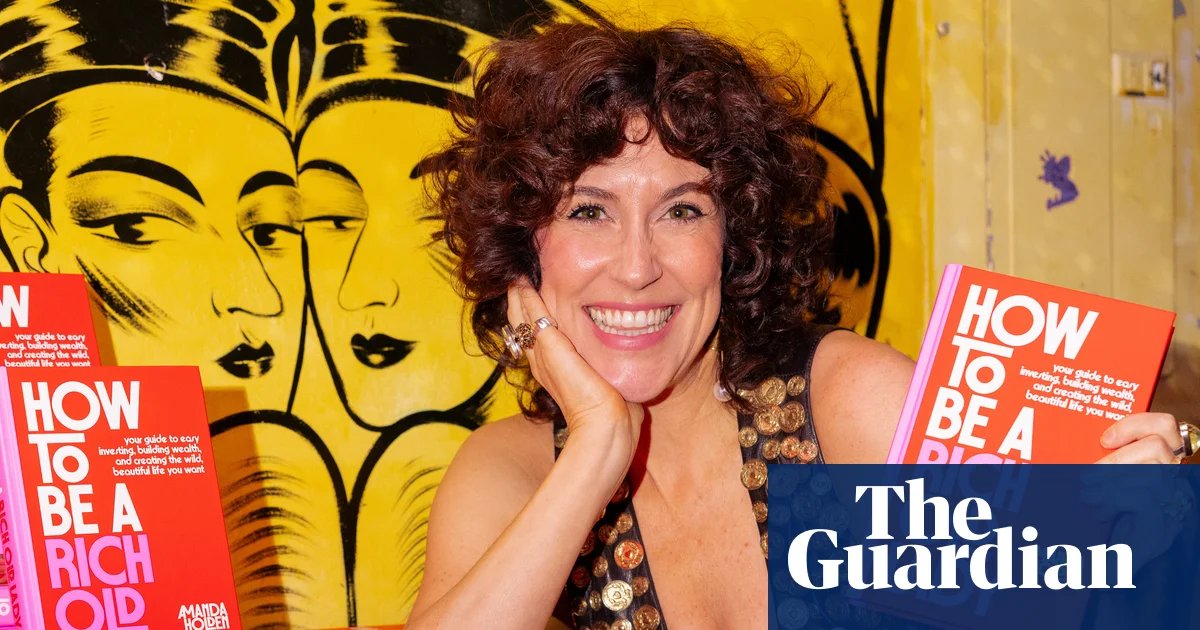
Amanda Holden is, in her words, an “ex-finance bro”. She landed a job in investment management right out of college and was earning a six-figure income by her early 20s. But after five years of “letting grown men scream at me about their money”, she desperately wanted out. So she committed to saving enough to quit and travel – and to leave the world of finance for good.
But a year later, Holden went back to the field, this time with a different mission. If her old career was, as she put it, “helping rich men get richer”, her second act would be using her hard-earned expertise to level the playing field. Holden is the founder of Invested Development, a blog-turned-online-course that encourages students (mostly women) to gain financial independence through investing. She says more than 25,000 people have taken her course.
“My students, who are mostly women, feel bogged down by unpaid labor, the financial responsibilities of motherhood and student debt,” she said. “They see finance as a world not designed for them, and they are correct.”
Holden’s book How to be a Rich Old Lady: Your guide to easy investing, building wealth, and creating the wild, beautiful life you want was released in March. It’s both an entertaining roadmap to financial literacy and a rallying cry for a better financial future, one in which everyone has access to the resources and support they need to stop worrying about money and focus on the fun stuff.
These days, Holden is as likely to be participating in an anti-ICE or pro-Palestine demonstration as she is to be hosting a workshop on planning for retirement. Her posts encouraging her 88,000 followers to invest in their 401(k) are interspersed with critiques of capitalism and billionaires.
She is quick to point out how capitalism is a catalyst for gender, racial and income inequality. But she’s also adamant that her followers should not feel guilty about maximizing their share. “You are either providing labor to the system or you are investing, and you are an owner of capital in this system,” she said. “It’s better to participate by gaining our own capital than working till we die.”
The Guardian caught up with Holden to talk about making money in a flawed system, the value of community and why “bad” financial decisions are sometimes worth it.
You left a job in investment management at age 28, feeling disillusioned. What pulled you back into finance?
After I quit, I figured my next job would be selling airbrushed trucker hats on the beaches of Mexico – anything but finance. Except this obnoxious little idea kept gnawing at me: maybe I wasn’t actually done here. During my finance years, I had also been helping my girlfriends learn this incredibly useful life skill – managing their personal finances – and I kept thinking there is so much need for better education on this topic.
My students see finance as a world not designed for them, and they are correct. They are told that talking about money is tacky, which is just a subtler, less explicit means of control. I have had many students in their 50s and 60s whose ex-husbands had prohibited them from being involved in the finances at all. They are learning about money for the first time ever, in a profound panic about how they’ll care for their ageing selves.
You teach a 15-part online course called Invested Development. What is the first thing you tell someone who is coming to you for advice and feels like they are already late on saving for retirement?
Don’t let worry or the weight of lost time talk you out of starting now! In 10 or 20 years, you’ll be thrilled you took the initiative today. What matters most is that you move with clarity from here on out. Your next step is getting an education and building a clear plan. There’s no use in shame, but there’s also no more time for fumbling around in the dark. You got this.
What does a “diverse investment strategy” look like upfront?
First, know that a retirement account such as a 401(k) or Roth IRA is really just a container for your investments. It gets special tax treatment when you invest for the long term.
When we talk about a diversified investment strategy, we’re talking about what’s actually inside that container. Diversification means owning assets that pay you in different ways and perform differently in different economic scenarios.
Inside your retirement account, this likely means a mix of global stocks and bonds, maybe some real estate holdings. And to actually get invested, most of us use baskets of these investments called funds. I’m a fan of index funds specifically because they’re low-cost and hands-off.
What do you say to people who have a resistance to investing because they worry their money is going to people and corporations they don’t want to support?
I get it. I grapple with this openly, in the book and online. That said, one of capitalism’s sneakiest tricks is making us think we have the option to opt out altogether. You are either providing your labor to the system or an owner of capital.
The system is designed for us to work until we die. If we don’t want to do that, the strongest tool the average person has is investing in a 401(k).
But is there a way to do the least amount of harm? Do you invest in ESG (environmental, social and governance) funds, for example? Or are there good ways to invest in your own community?
I personally use ESG index funds that specifically screen out both fossil fuels and weapons manufacturers, and describe how to do this in the book. But I will also admit that it’s a stretch to consider any stock investments “ethical”. Even if you scrape out weapons and oil, take a look at what’s left: big tech, which are now surveillance companies and war profiteers; big banks, big pharma, health insurers and so on. Shareholder capitalism, designed to enrich the already wealthy via relentless extraction from the earth and labor, is ethically dubious at best.
That said, especially in the US, regular people don’t have many great options. Compound returns from stock market investing are among the few tools we have to [age with] dignity.
One thing you can do is switch from your big bank to a local credit union. This way, your bank deposits will fund your neighbor’s small-business loan and not some billionaire’s next act of depravity.
I was relieved to read in your book that you think passive investment is the way to go. Can you explain why?
Passive investing means using an index fund that reflects an entire market as is; it’s a little bit of everything, so you’re casting the broadest net possible. For example, you can invest in a US stock market index fund, which reflects the entire US stock market. The opposite of passive investing is active management, where either you or a professional manager picks the “best” stocks. They are trying to “beat the market” and they charge you to do this. But the vast majority underperform the index average, and surprise! You still have to pay them, even when they do.
The best thing you can do is not be reactive. In fact, that is what makes women better investors. We have plenty of studies that show us that men are significantly more reactive to whatever is happening in the world.
What is significantly more important than staying on top of financial news and the stock market is staying on top of your ability to make money.
What is an actionable way to stay on top of your ability to earn money?
Instead of being an expert on the markets, be a subject matter expert on the way people are earning money in your industry, especially as AI takes over certain industries.
I am doubling down on what I know can’t be stolen or replicated by AI, like facilitating real connections between humans through online workshops and in-person events, and making content that’s actually funny. My vision for my career in the next 10 years is to transition to lower-paid work that I simply want to do, whether activism or art. Financial independence is what protects me and makes this possible.
In recent years you’ve participated in protests against the war in Gaza and anti-ICE demonstrations. What do you see as the connection between your activism and your personal finance work?
I feel it is my duty, as a personal finance teacher, to model a different ethos entirely. To me, the money itself has never been the goal. The goal of money is to be happy and to give you the space to work toward a better world for all.
The point of financial security is that it’s a foundation to take risks. Especially in 2023 and 2024, there was great risk in speaking out for Palestine. In addition to money and time, I lost followers, business relationships, friends.
But I believe [taking on] this type of financial risk is solidarity in action and the least we can offer Palestinians, our immigrant neighbors and all people who are under attack for simply existing.
Honestly, being able to show up in this way is essential to who I believe myself to be. It is my “why” behind my money.
More from Money whisperers:
What is your best tip for saving money right now?
Investigate all of the ways that our culture makes you hate yourself. Can you imagine the industries that would collapse if women started loving themselves? We live in an extraordinarily powerful system that is hammering away on our self-confidence and trying to get us to buy the next glam-glow-gravity-firming-mud treatment. You don’t need it.
What’s the worst financial decision you ever made?
Ha! On one hand, I have made plenty of terrible financial decisions. On the other, every decision we’ve ever made has shaped the special weirdo we are now. The two decades I spent as a binge drinker were costly in every sense. At times, it was an endless nightmare toggle between breaking my own life and then picking up the pieces, including financially. But damn, I also had fun.
If you lost everything and had to start from scratch, what would your first step be?
To lean on my community. Long before there were 401(k)s, we only had each other. I put a lot of effort – we could call it investing – in community structures. I take care of my friends and family, I participate in mutual aid, I know my neighbors and I am involved in local collective action. It’s not meant to be transactional, but if I were to lose everything, I know I could rely on my community, too. My community is, without a doubt, my favorite and most durable investment.
Four key takeaways from Amanda Holden
-
Invest in a broad index fund and don’t pay a money manager who will likely underperform the market.
-
Talk to your friends about money. It’s important for us to understand how we’re all making it and learn together.
-
Switch from your big bank to a community credit union to invest in your neighbors, not billionaires.
-
Give yourself a break and don’t let the system break you.