
Walk in the footsteps of gods, heroes and monsters: five trips to mythical Greece | Greece holidays
Some stories never get old. The poems and songs from Greek mythology – tales of tragedy, love and loss, war and revenge, jealous gods, magic and monsters – have been retold through the ages for good reason. Like all stories that really resonate, they deal in the flawed nature of humankind.
To the ancients, though, they were far more than legends; they explained the universe. From the Earth’s origins and the stories of constellations to ideas of justice and morality, they shaped the arts and sciences, and carved a shared cultural identity. Visiting Greece today, it’s clear how deeply rooted the myths still are in modern culture. From the capital (named after wise Athena) and beyond, this is a country steeped in legends.
Blaze a trail in the footsteps of heroes and monsters, but pay due respect to the gods – particularly Zeus (king of all, commanding the sky), and his brothers Poseidon (ruler of oceans) and Hades (overseer of the underworld) – lest, like Odysseus, you inadvertently anger them and spend the next 10 years trying to get home.
Navel gaze with Zeus at Delphi
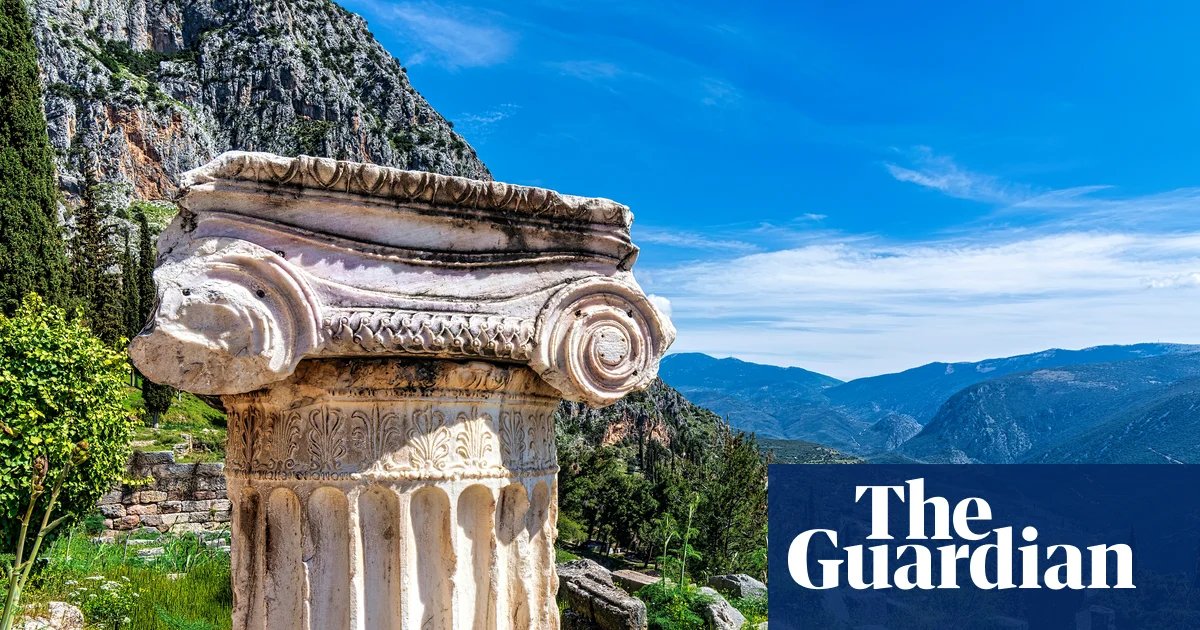
When Zeus wanted to find the world’s centre, the story goes that he released a pair of eagles. One flew east; the other west. They met “in the middle” – on the slopes of Mount Parnassus, at Delphi, navel of the ancient Greek world. While Athens’ Acropolis occupied Greece’s political centre, Delphi was its spiritual heart. Apollo established his temple here, and the seat of the oracle. Anyone seeking guidance – from lowly shepherds worrying about their goats to kings mulling matters of state – headed up the mountain to consult Apollo through his tongue-speaking vapour-sniffing priestess Pythia. Answers were considered divine truth, but notoriously cryptic (a bit rich after a three-day slog).
Today’s pilgrims are better-served by the present-day town of Delphi, beside the stunning archaeological site. Its tavernas and hotels, terraced into the southern edge of the cliffside, share the jaw-dropping panorama. Eat, drink and seek guidance at Apollo’s old pillars. Gawp at the impressive amphitheatre, framed by the peaks of Mount Kirfi, and the Pleistos valley below (a million-strong grove of ancient olive trees). Gaze west as the sun sets over the Corinthian gulf. Eagles or no eagles, you will feel yourself at the centre of the universe.
Where to stay: Kastalia Boutique Hotel, Delphi, doubles from £62 room-only, kastaliahotel.gr
Bathe in Hades’ river in Epirus
When the infernal heat of July and August hits, the only reasonable response is a refreshing dunk in a shady river. I favour the Acheron (as recommended by Circe to Odysseus when he needed a fast route into the underworld). Seek out this “River of Woe” – one of the five rivers encircling Hades’ realm of the dead. Not the happiest destination for the poor souls Hermes delivered to its banks, a coin for the ferryman clamped in their cold dead mouths. But for us? Absolutely delightful.
Cool, clear waters wind from the Tomares mountains, through the Acheron valley and out to sea. Its banks are fringed by lush forest and verdant hillsides. Visit Mesopotamos for the Necromanteion (oracle of the dead) and the fishing hamlet of Ammoudia where the river slows and spreads out to a delta (watch for otters) before pouring into the deep blue sea.
Swim, raft or zipline at the scenic Acheron Springs near Glyki. Head into the mountains, to the historic Souli watermills, and a laid-back taverna or Paradosiako, (literally a “traditional cafe”) by a stream, all rough-hewn tabletops on giant stones.
For the most magical trip, round the mountain to the Gates of Hades, where the river cuts through towering limestone cliffs, like an entrance to the other realm. Electric-blue dragonflies, bright butterflies and raptors fly overhead. Strong currents and deeper pools mean that some care is needed. Like Orpheus, Heracles and Odysseus, you’ll want to make sure to return from the underworld.
Where to stay: Atman Eco Lodge, near Glyki, doubles from £103 room-only, atmangreece.com
Float up to Nestor’s cave at Pylos
Homer’s “Sandy Pylos” is a handsome seaside town with a great deal going for it. Strategically placed inside the deep, well-protected – and gorgeous – Navarino bay, it was the site of a triumphant naval battle against the Ottoman empire during the war of Greek independence (proud locals re-enact it each October). It features prominently in both the Odyssey and the Iliad as the manor of wise old King Nestor (Nestor’s Palace, nearby, is Greece’s best preserved Mycenaean monument). It’s also an easy distance for a day trip to ancient Messine, a wonderful and underrated archaeological site.
Guarding Pylos itself is the well-preserved Ottoman castle, Niokastro, but I prefer the old ruined Paliokastro to the north of the bay. It overlooks Voidokilia, a bay where turtles nest. No sunbeds, no cafes, just piles of soft sandy dunes, backed by wetlands hosting hundreds of migratory birds and rare reptiles. You’ll want to go down there. Nestor’s cave is here, the spot where a precocious infant Hermes hid the cattle he stole from Apollo. If you can’t face another ascent, float in turquoise water and stare up at its gaping entrance.
Where to stay: Dio Pigadia ecovillage and farm, cottages from €50 a night, tiny cabins from €25, dio-pigadia.com
after newsletter promotion
Marvel at Mycenae’s Lion Gate
Mycenae, the bronze-age citadel, is steeped in myth, founded, the ancients believed, by Perseus, son of Zeus. This is the legendary homeland of Agamemnon, king of “well-built Mycenae, rich in gold” as Homer had it (archaeological excavations confirmed his accuracy). The acropolis straddles a hilltop in the Argolid plain, overlooking the Saronic gulf’s approaches towards Nafplion and Argos. Strategic for the Mycenaeans, breathtaking for us.
You’ll want to stop at the Lion Gate entrance, an impressive example of megalithic architecture: a pair of lions are sculpted in stone relief. I stood with my father and stared. He always found the myths rather nonsensical, but even he had pause for thought at these Cyclopean walls, colossal blocks, 20 tonnes apiece.
Inside are the ancient palace ruins, the tomb of Clytemnestra and the treasury of Atreus. Admire Mycenaean craftsmanship and culture in the museum – excavated artefacts include tablets in Linear B (the earliest attested form of written Greek). Don’t miss the copy of Agamemnon’s golden funeral mask (the original is in Athens).
Where to stay: Grand Sarai hotel in Nafplion, doubles from £130 B&B, grandsarainafplio.com
Poseidon’s love shack on Paxos
This is one for the romantics and lovers of nature – and is a laid-back holiday. It’s a rare treat to see the gods’ softer side, and the ridiculously pretty island of Paxos came about thanks to Poseidon at his most tender. The usually raging, storm-stirring god created this little Eden (now a protected site) in the throes of passion – his trident is the island’s emblem. Smitten at first sight by the sea nymph Amphitrite, who fled to the deepest ocean to evade him, a deeply infatuated Poseidon sent Delphin, a kind of charming dolphin, in pursuit to talk up his good side. It worked – she returned, as his queen (and mother of dolphins and seals).
Poseidon struck off the southern tip of Corfu to form Paxos – effectively one large olive grove – as their love nest, and placed Delphinus among the stars as a reward. Honour the couple by enjoying that uncannily turquoise sea, snorkel over beautiful (and protected) posidonia seagrass meadows, and look out for the dolphins that are often seen here (depicted pulling Amphitrite’s chariot along with seahorses that are very occasionally spotted in the area).
The famous blue caves here are said to be the pair’s love-shack-cum-palace, and attract numerous boat trips in season. Take care on approach to avoid disturbance to sealife. Visit lovely Lakka for its horseshoe bay and Gaios, the pretty little main town. End your days stargazing and remember to toast the five-starred Dolphin constellation in thanks for this paradise.
Where to stay: Village Life Penthouse from €195, paxosownersdirect.com
Susan Smillie’s book, The Half Bird, recounts her sailing voyage from the UK to Greece, and the mythical destinations she encountered along the way. To support the Guardian, order your copy at guardianbookshop.com. Delivery charges may apply